A great day on the water depends on more than the weather and destination. The comfort of the seating can influence how long passengers want to stay onboard, how relaxed they feel, and how much they enjoy the journey. For that reason, marine interiors deserve the same thoughtful attention as other parts of a boat. The right boat upholstery material can combine comfort and visual appeal with the durability needed for repeated exposure to water, sunlight, and everyday use. Boat Upholstery Broward specializes in professional upholstery for boats and yachts, helping owners create interiors suited to their vessels.
Seating Shapes the Onboard Experience
Passengers interact with seating throughout almost every trip.
They sit, lean, move between areas, and often place personal belongings on cushions. When upholstery becomes cracked or uncomfortable, those small inconveniences can affect the entire experience.
A seating upgrade can address several concerns at once.
Owners may notice improvements in:
- Comfort
- Cushion support
- Interior appearance
- Ease of cleaning
- Resistance to everyday wear
This makes upholstery an important part of maintaining a boat rather than simply a decorative project.
Material Performance Comes First
Marine seating faces conditions that ordinary furniture does not.
Direct sunlight, moisture, salt, and frequent cleaning can quickly expose weaknesses in unsuitable materials. Exterior cushions face even greater challenges because they remain exposed to changing weather.
A boat upholstery material should therefore provide the performance necessary for its intended location.
UV resistance, moisture resistance, color stability, and resistance to mold can all influence long-term results.
The Right Texture Can Improve Comfort
Material texture affects more than appearance.
A surface that feels pleasant against the skin can make extended periods of sitting more comfortable. Texture can also influence how easily dirt and residue can be removed.
For owners who regularly spend entire days onboard, these small differences can become surprisingly important.
A thoughtful material selection should consider both how the surface looks and how it feels during real use.
Light and Dark Colors Have Different Effects
Color can dramatically influence the character of a marine interior.
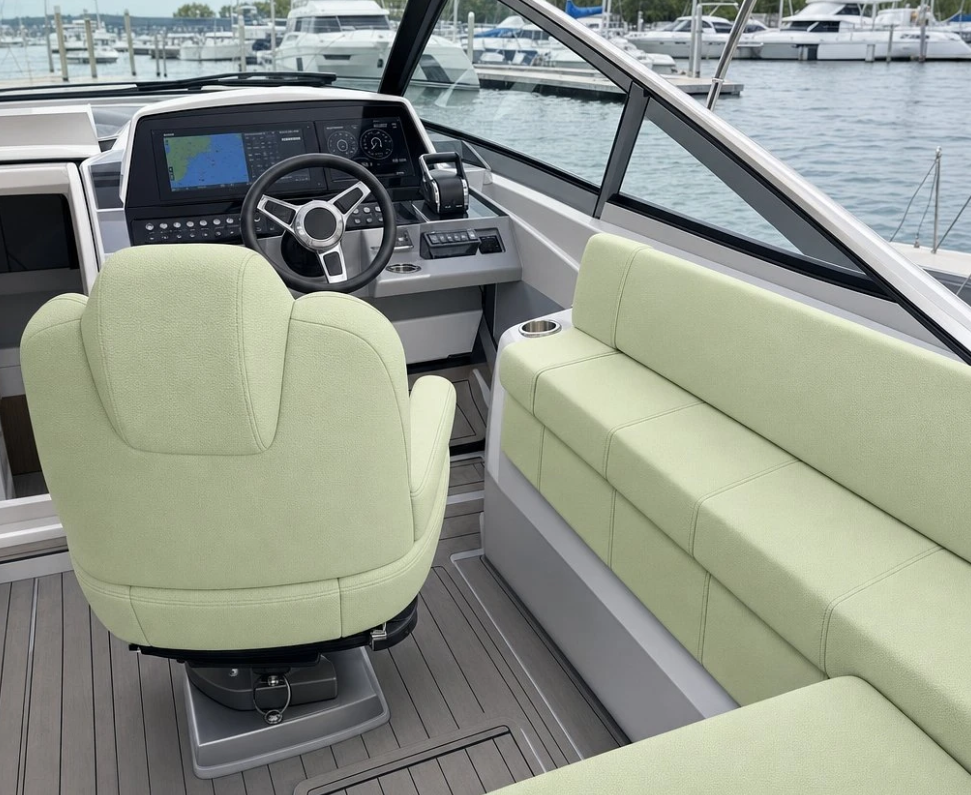
Light shades can make a seating area appear larger and brighter. They also create a relaxed coastal atmosphere that works well with many boat designs.
Darker shades can introduce contrast and give the interior a more dramatic character.
Many owners combine both approaches by using a light primary boat upholstery material with darker piping, side panels, or stitching.
Foam Should Not Be Overlooked
The exterior covering receives most of the attention during an upholstery project, but the foam underneath can determine how comfortable the finished seat feels.
Old foam can become compressed after years of use. It may also lose its original shape or absorb moisture.
Replacing deteriorated foam can restore the structure of the cushion and provide better support.
A complete restoration should therefore evaluate the entire seating system rather than focusing exclusively on visible material.
Exposed Seats Need Extra Protection
Open seating areas experience the harshest conditions.
Bow cushions, cockpit seating, and helm seats may receive direct sunlight for hours. They can also encounter rain, spray, sunscreen, and wet clothing.
For these locations, selecting a durable boat upholstery material becomes especially important.
Protective covers can further reduce unnecessary exposure when the boat remains unused.
Custom Details Can Transform Factory Seating
An interior does not need a completely new layout to feel different.
Small design changes can create a significant visual effect. Contrast stitching can emphasize cushion shapes, while decorative piping can define individual sections.
Other popular options include:
- Two-tone upholstery
- Diamond stitching
- Custom embroidery
- Textured panels
- Contrasting borders
These details can give standard seating a more distinctive appearance.
Maintenance Determines How Long It Looks New
Even premium materials need regular care.
Salt residue, sunscreen, food, and moisture can accumulate quickly during the boating season. Removing these contaminants regularly can help protect the surface.
Owners should consider making these habits part of every trip:
- Wipe seating after use
- Remove salt residue
- Clean spills promptly
- Dry wet cushions
- Inspect seams
- Use covers during storage
Regular maintenance can help a boat upholstery material maintain its appearance and performance for longer.
Choose for Your Boating Lifestyle
The best material is not necessarily the most expensive option.
A boat used mainly for offshore fishing may require different priorities from a vessel used for family cruising or entertaining guests.
Owners should think about the activities that take place onboard before selecting materials.
Frequent fishing may make easy cleaning particularly important. Long cruises may place greater emphasis on comfort. A luxury cruiser may prioritize texture and design alongside durability.
Think About the Long-Term Result
An upholstery project should remain useful well beyond installation day.
Choosing a timeless color palette, durable materials, supportive foam, and practical finishing details can reduce the need for frequent updates.
A quality boat upholstery material can become a long-term investment when owners select it according to the vessel’s environment and maintain it consistently.
Final Thoughts
Marine seating has a direct influence on comfort, appearance, and the overall boating experience. The right combination of material, cushioning, design, and maintenance can make an older interior feel fresh while improving its everyday practicality.
Choosing the right boat upholstery material is therefore about more than selecting a color. It means finding a surface that can handle the environment, support the way the boat is used, and remain attractive over time.